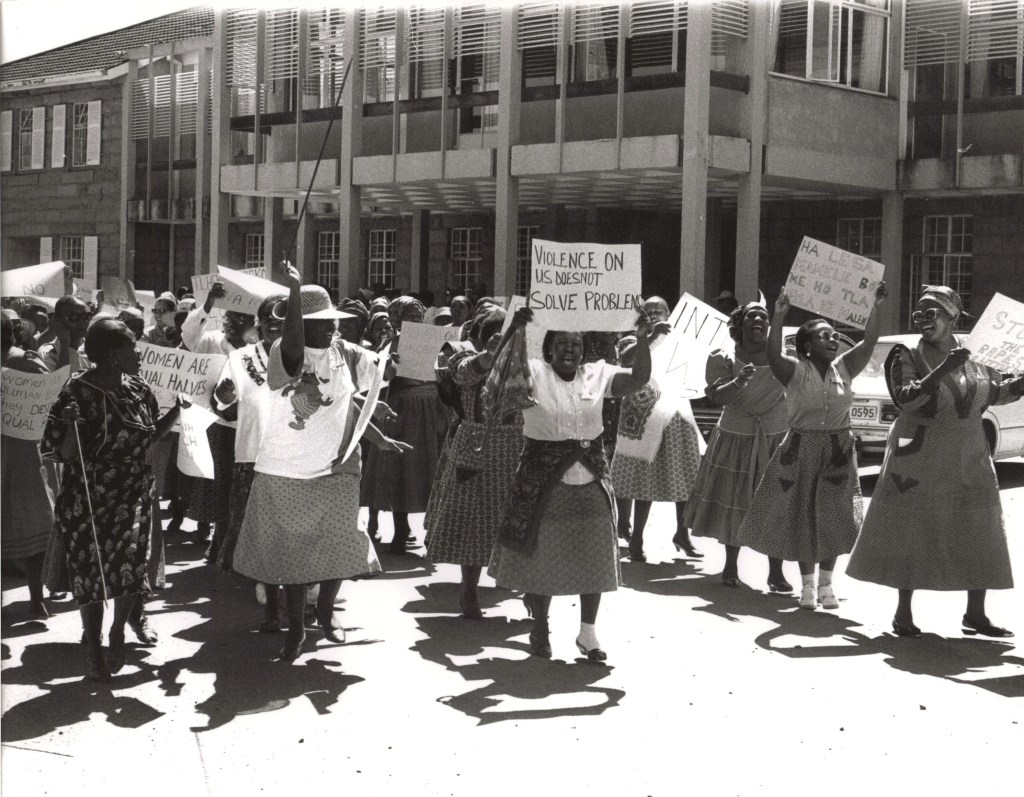
In Africa today, many might still consider the term “African feminism” to be somewhat an oxymoron. This is due to the idea that universal human rights are a Western invasion that has corrupted indigenous cultural values. African feminists or “modern women” as they’re often condescendingly called, are seen as traitors of culture and the disdain and patronisation of such women is pervasive in society. For example, in Fela Kuti’s “lady”, the repeated line “If you call am woman, African woman no go gree, she go say I be lady “alludes to the westernisation of the African woman by her rejection of the label “woman” in favour of the more western word, “lady”. While Africa’s historical and current experience with imperialism might justify the continent’s caution towards Western influences, the idea that Feminism is western and un-African is a huge misconception. In reality, the concept of feminism has long existed in Africa even before the word entered our vocabulary. This is evident from the many matriarchal societies and existence of women in pre-colonial Africa who held various positions of influence and power. While pre-colonial African societies were far from completely egalitarian, they were hardly anti-feminist. Additionally, African feminists have long felt the need to resist western cultural imperialism which undermines African ideologies, philosophies and values. African feminism is constructed by African women to address specific conditions and needs of continental African women while committed to incorporating African histories and cultures to formulate fitting tools for empowering women. African feminism is not simply a reactionary construct to the exclusion of African women from mainstream feminism. It is an acknowledgment of our continental identity as shaped by our interactions with culture, colonialism, neo-colonialism and race. African feminism does not necessarily call for a redefinition of feminism, but rather the recognition that women’s identities in Africa differ from women’s identities in the west and as such, feminism is Africa will inevitably take on some different forms that it does in the west.